Introduction: The Digital Revolution of Competition
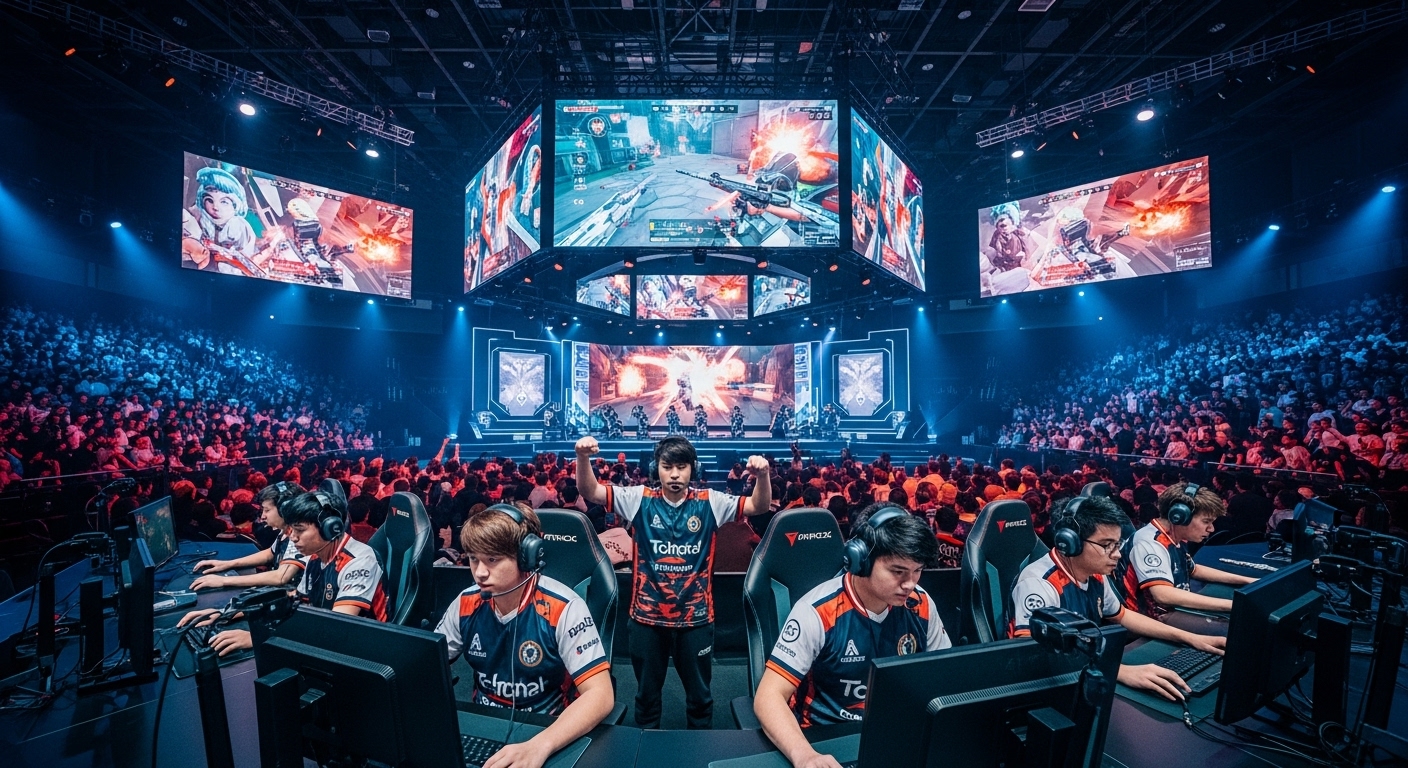
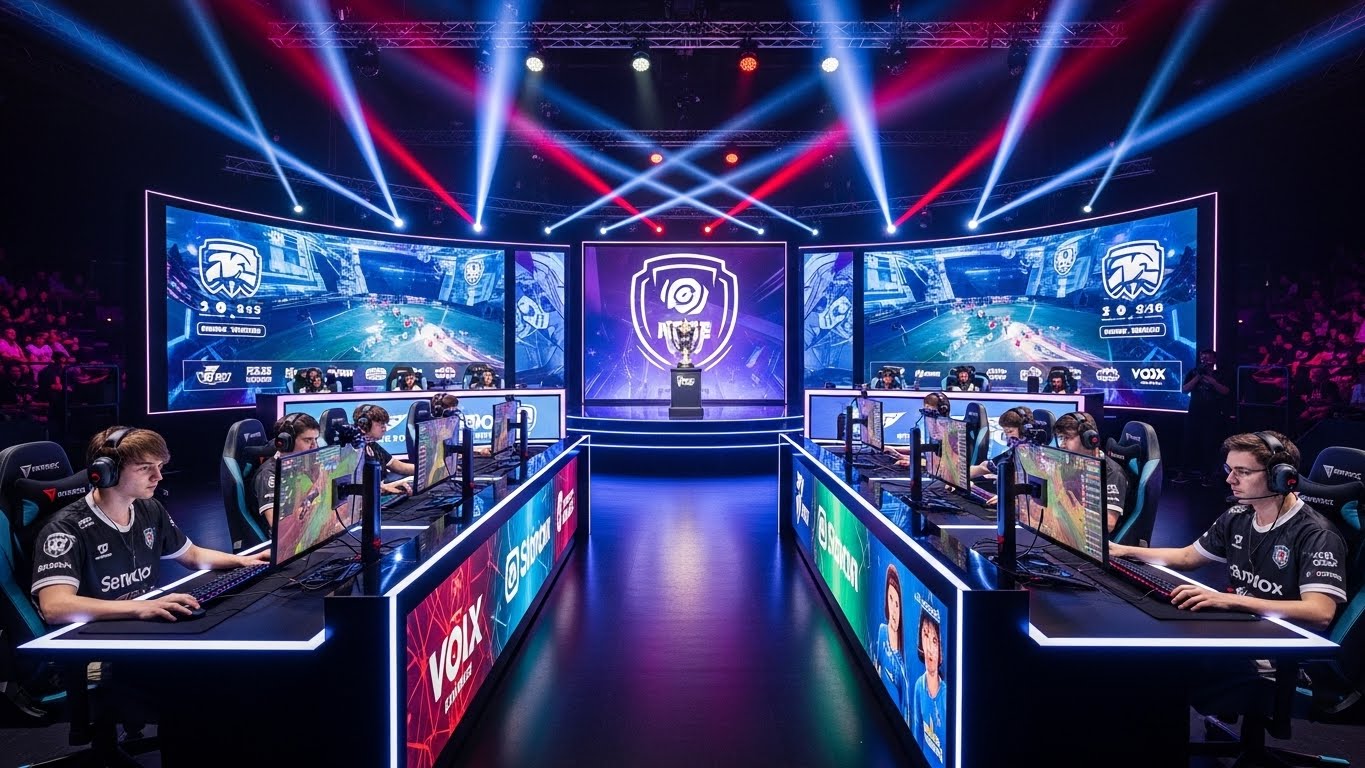
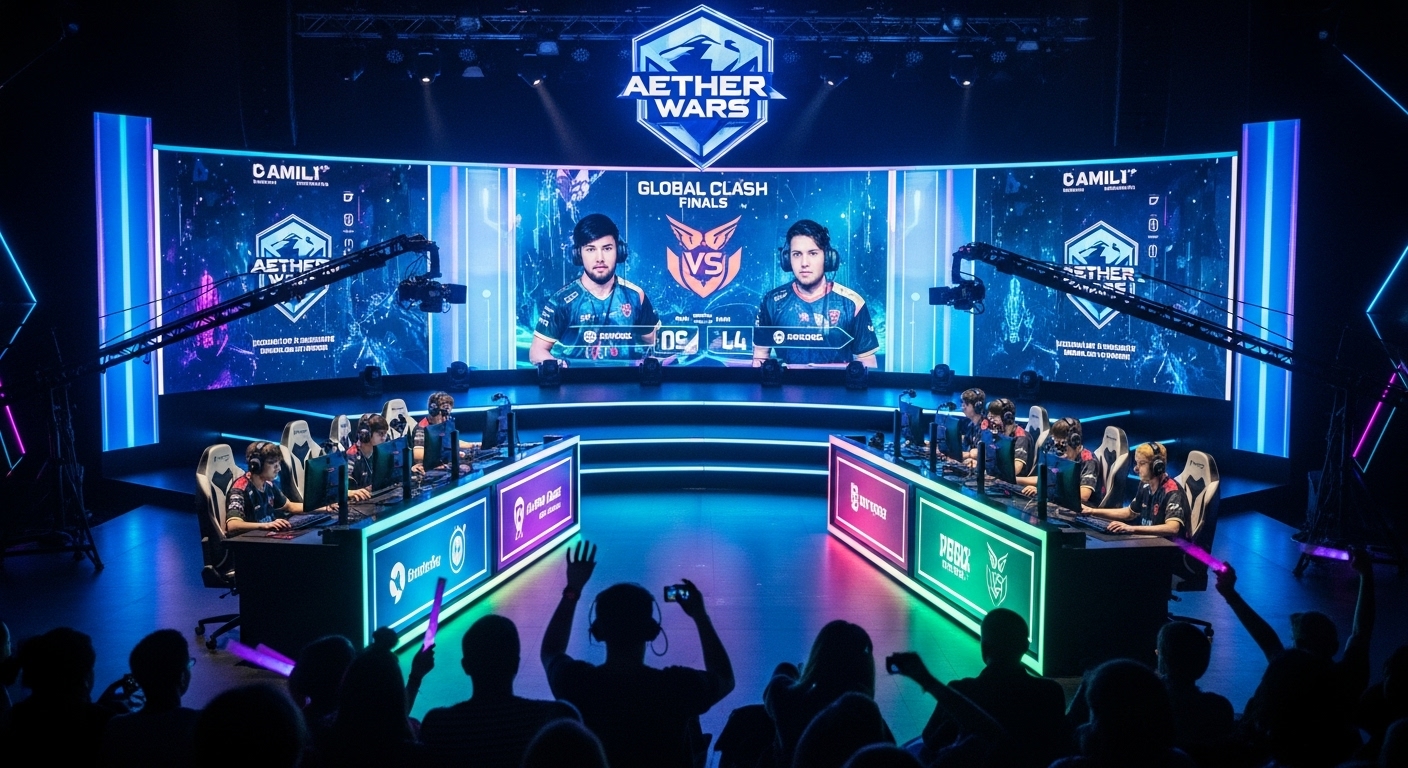
In the last two decades, few industries have grown as explosively as Esports. What began as a niche activity for video game enthusiasts has evolved into a billion-dollar global phenomenon. Once considered a pastime for the few, competitive gaming has now become a mainstream spectacle attracting millions of viewers, massive sponsorships, and professional athletes with fan followings that rival traditional sports stars. Esports today represents more than just gaming; it’s a cultural movement redefining entertainment, technology, and sportsmanship for the digital age.
The journey from small, local tournaments in internet cafes to sold-out stadiums streaming to millions worldwide is a story of innovation, passion, and persistence. Esports didn’t rise overnight—it grew from the dedication of gamers, developers, and communities who believed that digital competition was just as real as any physical sport.
The Early Days of Esports: Seeds of Competition
Before Esports became a global phenomenon, its roots were planted in the early days of arcade gaming. In the late 1970s and early 1980s, arcades became social hubs where players would challenge one another for the highest score. The 1980 “Space Invaders Championship,” hosted by Atari, is often cited as the first large-scale gaming competition, drawing over 10,000 participants across the United States. This marked the beginning of gaming as a spectator event.
Throughout the 1990s, as home consoles and personal computers became more accessible, gaming communities began forming organically around popular titles. Games like Street Fighter II, Quake, and StarCraft became the foundation of early Esports scenes. The thrill of one-on-one battles, strategy-based warfare, and global leaderboards started to turn casual gaming into serious competition.
LAN (Local Area Network) parties were the lifeblood of Esports during this period. Enthusiasts would gather with their bulky computers, connect them through cables, and battle late into the night. It wasn’t about fame or money then—it was about pride, bragging rights, and the shared excitement of victory.
The 2000s: Birth of the Professional Era
The early 2000s marked a major turning point for Esports. Internet speeds improved dramatically, enabling online multiplayer gaming on a large scale. Titles like Counter-Strike, Warcraft III, and Halo became competitive staples. For the first time, players could compete globally without leaving their homes, and the concept of the “professional gamer” began to take shape.
This was also the decade when Esports organizations and leagues began to form. The Cyberathlete Professional League (CPL), Major League Gaming (MLG), and World Cyber Games (WCG) laid the foundation for structured tournaments and ranking systems. These events offered prize pools that, while small by today’s standards, represented a huge step forward for competitive gaming.
South Korea emerged as the epicenter of Esports during this time. With lightning-fast internet infrastructure and government support, games like StarCraft became national sensations. Professional gamers were treated like celebrities, and televised matches attracted massive audiences. This period cemented South Korea’s legacy as the birthplace of modern Esports culture.
Streaming and Social Media: The Game-Changer
If the 2000s built the stage, the 2010s turned on the lights. The rise of streaming platforms like Twitch and YouTube Gaming completely transformed Esports. No longer did fans have to rely on obscure tournament broadcasts or recorded replays. Live streaming allowed millions of fans to watch tournaments, follow their favorite players, and engage with gaming communities in real time.
Esports suddenly became accessible to everyone. Whether you were in Seoul, Los Angeles, or São Paulo, you could tune in to global tournaments from your phone or laptop. The audience for Esports exploded as a result, and so did sponsorship interest. Major brands like Coca-Cola, Intel, and Red Bull began investing heavily in Esports events and organizations.
Social media further amplified the scene. Platforms like Twitter, Instagram, and TikTok turned gamers into influencers. The personal connection between players and fans became a powerful tool for building communities and promoting tournaments. Players weren’t just athletes—they were entertainers, content creators, and cultural icons.
The Esports Ecosystem: Beyond the Players
Esports is far more than just players and games—it’s an entire ecosystem built on collaboration between multiple industries. Game developers play a crucial role by designing competitive-friendly titles and supporting leagues through patches, updates, and balance changes. Publishers like Riot Games, Valve, and Blizzard have created professional leagues that rival traditional sports in structure and organization.
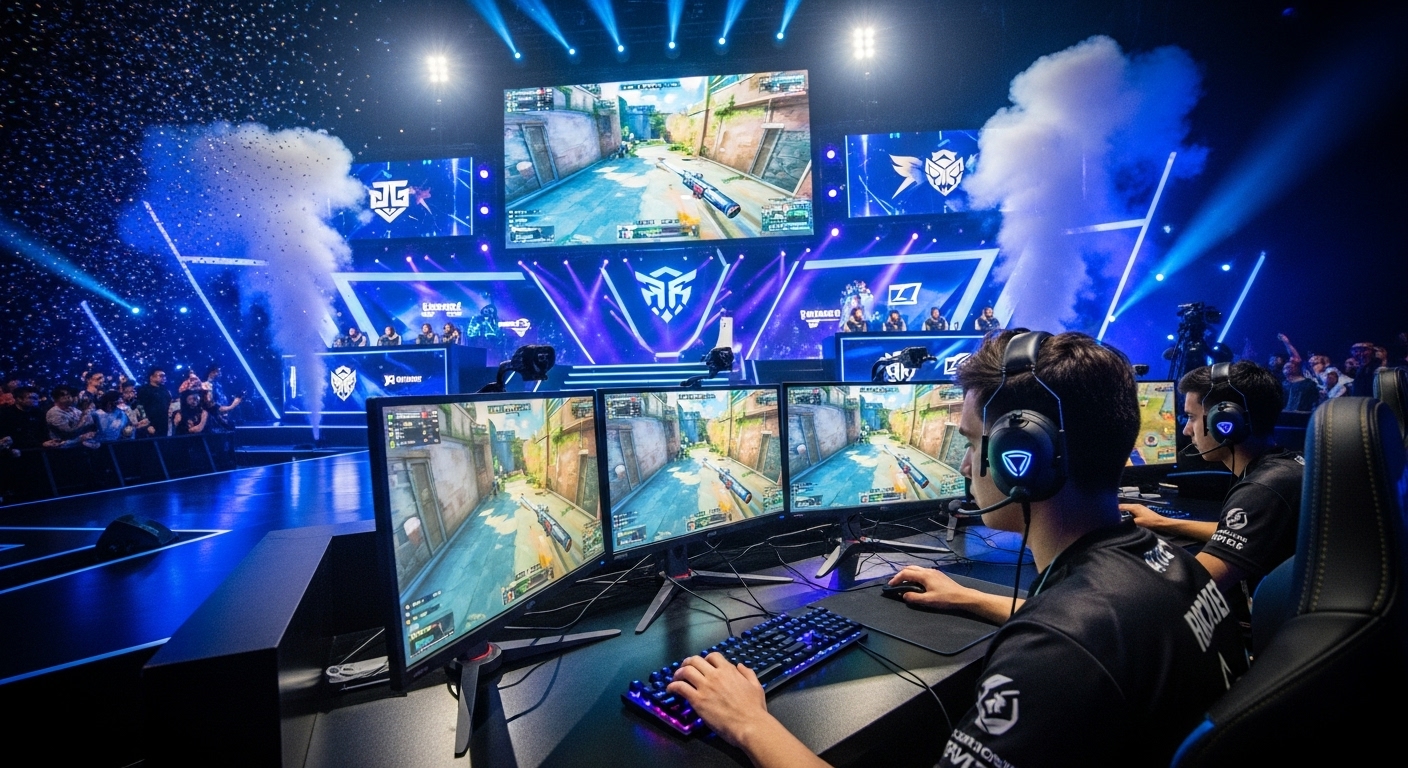
Event organizers manage massive tournaments across continents, filling arenas like Madison Square Garden and the Staples Center. Production crews, commentators, and analysts bring professional polish to broadcasts, turning gaming matches into cinematic experiences. Esports journalism and analytics firms provide data-driven insights and storytelling that deepen fan engagement.
Even universities have joined the movement, offering scholarships for Esports athletes and developing programs focused on gaming management and design. Entire career paths—coaching, broadcasting, event production, content creation—have emerged within the Esports ecosystem.
Iconic Games That Defined Esports
League of Legends
Few games have had as large an impact as League of Legends (LoL). Developed by Riot Games, it transformed Esports into a global spectacle with its annual World Championship. Millions tune in every year to watch teams battle for glory and massive prize pools. LoL’s consistent updates, diverse characters, and strategic gameplay have made it a cornerstone of competitive gaming.
Dota 2
Valve’s Dota 2 is another giant in the Esports arena. Its annual tournament, The International, is famous for its enormous, community-funded prize pools that often surpass tens of millions of dollars. The strategic complexity and teamwork required make it one of the most demanding and respected games in Esports history.
Counter-Strike: Global Offensive
CS:GO has stood the test of time as one of the purest competitive shooters ever made. Its simple concept—attackers versus defenders—belies the incredible skill and tactical depth required to master it. Tournaments like ESL One and PGL Major draw huge crowds, and CS:GO players are regarded as some of the most mechanically gifted in gaming.
Fortnite and Battle Royale Games
Epic Games’ Fortnite brought a younger generation into Esports. Its combination of building mechanics, cartoonish visuals, and frequent updates kept gameplay fresh and unpredictable. The Fortnite World Cup showcased teenage prodigies earning life-changing sums, highlighting how accessible Esports had become.
Valorant and the New Generation
Valorant, also by Riot Games, represents the next evolution of competitive gaming. Blending tactical shooting with character-based abilities, it’s designed for high-stakes professional play and has rapidly built a thriving Esports scene. The future of competitive gaming is clearly in hybrid experiences like these.
The Business of Esports: From Passion to Profit
The Esports industry has grown into a multibillion-dollar sector encompassing broadcasting, merchandising, sponsorships, and betting. Major corporations see Esports as the future of entertainment for the digital-native generation. With a global audience exceeding 500 million people, the potential for growth is massive.
Sponsorships and advertising are the backbone of Esports revenue. Brands looking to reach young, tech-savvy audiences have poured money into team partnerships, tournament naming rights, and influencer campaigns. Meanwhile, streaming platforms generate income through subscriptions, donations, and ad placements during live matches.
Franchised leagues have added stability to the industry. Similar to the NBA or Premier League, games like Overwatch and League of Legends introduced city-based franchises with long-term investments, salaries, and fan bases. This model provides a sustainable business framework, ensuring that Esports continues to evolve responsibly and profitably.
The Players: Modern-Day Digital Athletes
Professional Esports players train as rigorously as traditional athletes. Their days are filled with practice sessions, strategy reviews, and physical conditioning. Mental stamina is just as crucial as reflexes, as the stress of high-level competition can be intense. Many teams now employ psychologists, nutritionists, and fitness trainers to help players perform at their best.
These players achieve celebrity status. They sign endorsement deals, feature in media campaigns, and attract fanbases across the globe. Yet, their careers are often short-lived, as reaction times and hand-eye coordination peak at a young age. Despite this, the legacy of top-tier players continues through coaching, streaming, and content creation after retirement.
Esports and Traditional Sports: Rivals or Partners?
The relationship between Esports and traditional sports has shifted from rivalry to partnership. Initially, critics dismissed gaming as “not real sport,” citing the lack of physical exertion. However, as Esports demonstrated the same levels of strategy, teamwork, and discipline found in physical sports, opinions began to change.
Traditional sports franchises now invest heavily in Esports. Football clubs like Paris Saint-Germain, FC Barcelona, and Manchester City have established their own Esports teams. The International Olympic Committee has even explored integrating Esports into future Olympic programs, acknowledging its cultural and athletic value.
The synergy between the two worlds is growing. Both industries share a focus on entertainment, performance, and community, and they continue to learn from each other’s success models.
The Cultural Impact of Esports
Esports has redefined youth culture and digital identity. It has become a social space where communities form, friendships blossom, and creativity thrives. Gaming conventions, cosplay, and streaming culture are all extensions of the Esports world, blending art, technology, and social interaction.
Representation has also evolved. Esports has given opportunities to players from diverse backgrounds to compete on equal footing, regardless of geography or physical ability. Female Esports leagues and inclusive initiatives are challenging stereotypes and promoting diversity within the industry.
In education, Esports programs teach teamwork, leadership, communication, and strategic thinking—skills that extend far beyond gaming. What was once dismissed as a hobby is now recognized as a legitimate career path and cultural force.
Challenges in the Esports Industry
Despite its meteoric rise, Esports faces challenges. Player burnout, lack of standardized regulation, and issues like cheating or match-fixing occasionally tarnish its reputation. The pressure to perform in front of millions can take a mental toll on young players, leading to early retirements or health struggles.
Monetization also remains uneven. While top players and major organizations thrive, smaller tournaments and semi-professional players often struggle to make a living. The industry continues to search for ways to ensure fair compensation and sustainable careers.
Additionally, maintaining the integrity of competition is critical. Developers and organizations must combat hacking, doping, and unethical betting practices to protect the credibility of Esports as a professional pursuit.
The Future of Esports: Innovation and Expansion
The future of Esports looks brighter than ever. Virtual reality, augmented reality, and artificial intelligence are expected to revolutionize gameplay and viewing experiences. Imagine arenas where fans can step inside the game through VR headsets, or AI-driven coaching tools that train players to perfection.
Global expansion is inevitable. Emerging markets in Africa, the Middle East, and South America are seeing rapid growth in gaming infrastructure. As internet access improves, new stars will rise from regions previously overlooked in the competitive scene.
Cross-platform play, mobile Esports, and blockchain integration may redefine competition and ownership in the next decade. The industry’s adaptability ensures that it will continue to evolve alongside technology and audience preferences.
Conclusion: The Spirit of Digital Competition
Esports is more than just a game—it’s a revolution in how we perceive competition, community, and creativity. From its humble beginnings in smoky arcades to grand international arenas, it represents the human desire to connect, compete, and excel. Every victory, every match, and every new champion adds another chapter to a story still being written.
In many ways, Esports embodies the spirit of the modern age: global, connected, and driven by passion. As it continues to grow, it will not only shape entertainment but redefine what it means to be an athlete, a fan, and a member of the digital generation.